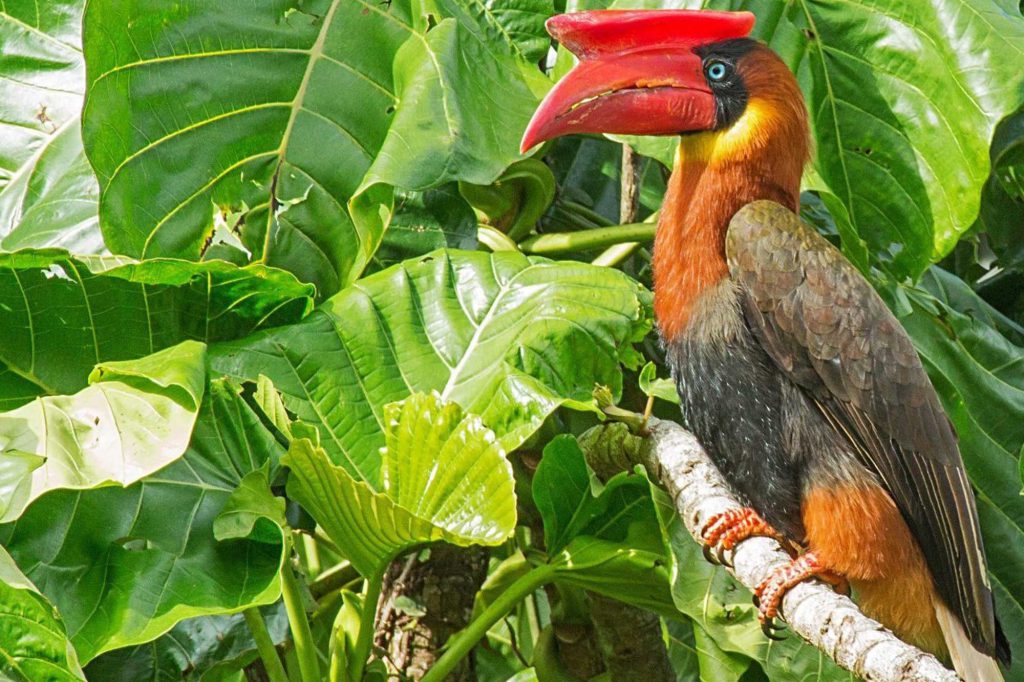




EKsplore Saribuhay:
PHILIPPINE BIRDS
Discover the fascinating birds that enrich our forests with their unique characteristics, remarkable behaviors, and important roles in nature.
EKsplore Saribuhay:
PHILIPPINE BIRDS
Discover the fascinating birds that enrich our forests with their unique characteristics, remarkable behaviors, and important roles in nature.
EKsplore Saribuhay:
PHILIPPINE BIRDS
Discover the fascinating birds that enrich our forests with their unique characteristics, remarkable behaviors, and important roles in nature.
Discover the sights and inspiration behind Enchanted Kingdom’s one-of-a-kind flying theater attraction!
DISCOVER THEIR STORIES
Explore the fascinating stories behind the birds featured in the Agila The EKsperience: SARIBUHAY. From their remarkable behaviors to the forests they call home, uncover what makes each species truly special.
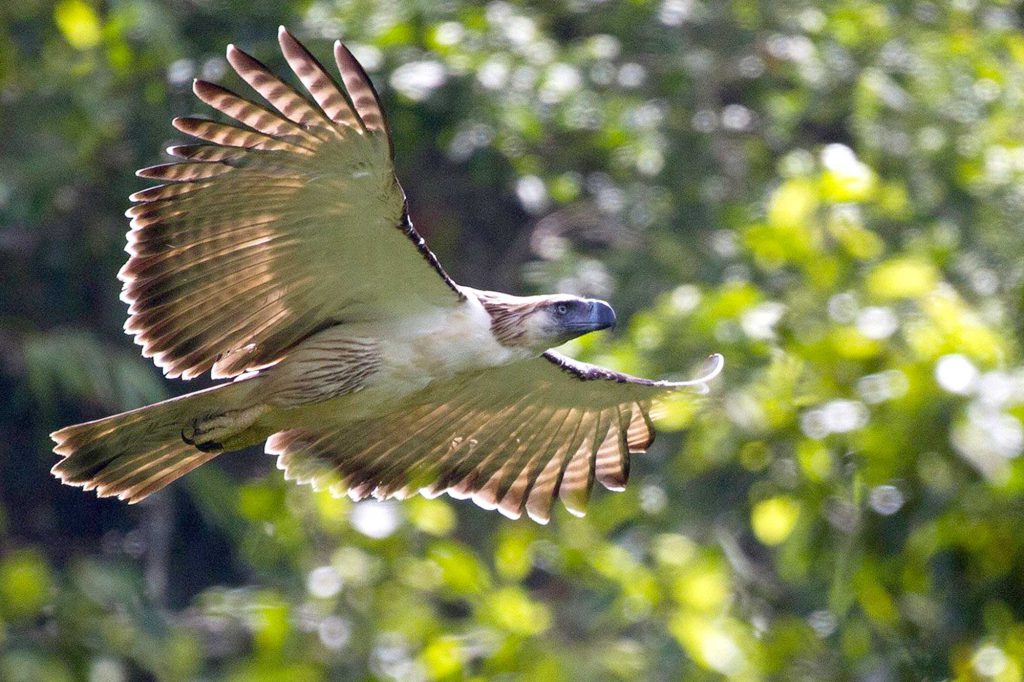
PHILIPPINE EAGLE / HARING IBON
Pithecophaga jefferyi
It's a single genus and species that is irreplaceable. This is why we need to protect it from extinction.
The Philippine Eagle, also known as the Haring Ibon or King of the Skies, is our national bird. While the Harpy Eagle is the heaviest, the Philippine Eagle is the largest eagle by length and wing surface, and the only blue-eyed aerial predator on Earth!
Its scientific name is Pithecophaga jefferyi, from the Greek words pitekos (meaning monkey) and phagien (meaning to eat), describing it as a monkey-eating eagle. The name jefferyi honors Jeffery, John Whitehead's father, who supported the expedition when John first obtained a specimen of the Philippine Eagle in Samar. Yet scientists proved that this eagle's diet does not consist solely of monkeys, but also includes rats, snakes, and lizards. This classifies it as an opportunistic carnivore that feeds on any animal in its environment. Because of this discovery, the government issued Presidential Decree No. 1732, officially renaming the bird from Monkey-eating Eagle to the Philippine Eagle. The Agila has truly left a mark on natural history.
The Agila is the only one of its kind in the world, making it as unique and irreplaceable as the Filipino people it represents. This eagle is proudly Pinoy, reflecting values like panililigaw (courting) and pagpapahalaga sa pamilya (being family-oriented). Male eagles show their reliability to females by caring for them, working hard, bringing food, and offering protection. Once paired, Philippine eagles stay together for life, hunting and raising their young as a team. They breed slowly, laying just one egg every two years, and spend years nurturing their eaglet until it can fly on its own at around five to seven years old.
These eagles build their nests in old-growth Dipterocarp forests in Luzon, Samar, Leyte, and Mindanao. They are territorial and solitary raptors, needing 4,000 to 11,000 hectares of land to thrive in the lush mountains. The Agila is also an umbrella species, meaning that when its needs are met and the forest is healthy, it automatically extends its umbrella of protection towards the entire rainforest ecosystem and coexisting species. Sadly, the Philippine Eagle is one of the most endangered birds in the world, with fewer than 400 pairs left in the wild. Deforestation, hunting, trapping, low genetic diversity, and climate change all threaten its survival. That’s why it’s so important for us to work together to protect this national treasure from extinction.
In 2016, Enchanted Kingdom adopted an eagle named ‘Enchanting Kagitingan’, which stands for heroic strength and courage. In partnership with the Philippine Eagle Foundation, Enchanted Kingdom helps protect, breed, and conserve this eagle. By raising awareness and supporting organizations that care for our wildlife, we can help these amazing birds thrive.
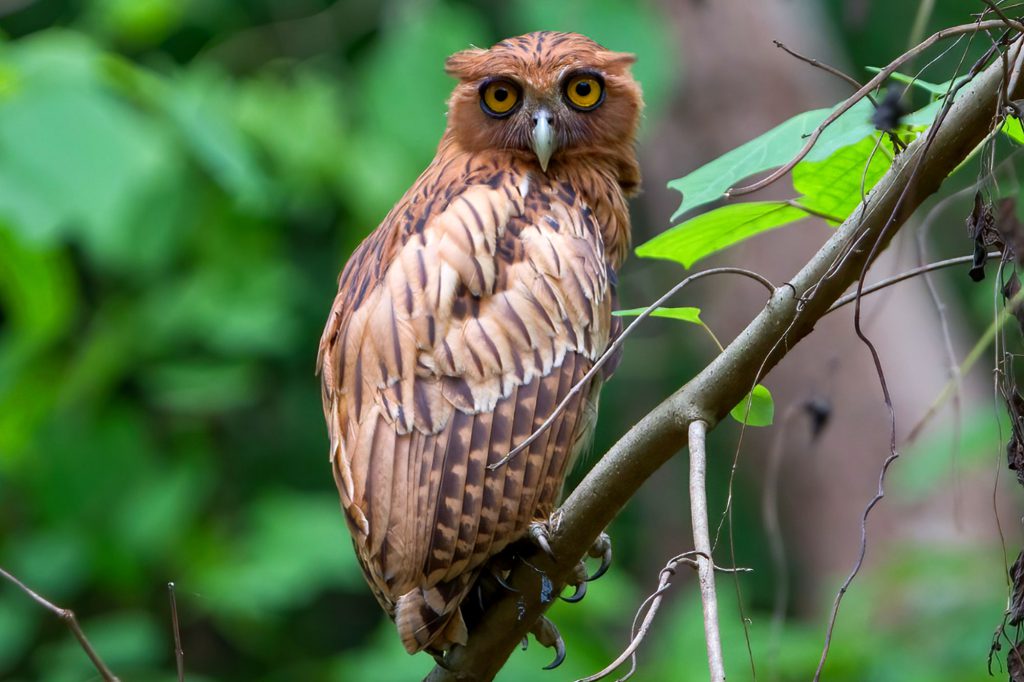
PHILIPPINE EAGLE OWL
Ketupa philippensis
It's the largest owl in the country. In Cebuano, owls are called “kuwago”.
The Philippine Eagle Owl (Ketupa philippensis / Bubo philippensis) is the country's largest owl, haunting the shadowy edges of dense lowland forests near winding riversides and tranquil lakes. Scattered across the archipelago, from the wild Sierra Madre to the misty peaks of Mt. Kitanglad and Mt. Apo, it shares its secretive world with the majestic Philippine Eagle.
This elusive bird is among the rarest in the Philippines; its mysterious habits make every sighting into a challenge for scientists and researchers. By day, it vanishes into the forest, its warm brown feathers blending perfectly with tree bark as it perches silently. This owl is strictly a nocturnal predator that hunts rodents and amphibians at night. Its sharp vision lets it spot prey even in the dark, and its bright, unblinking yellow eyes leave birdwatchers in awe. With large wings and special feathers, it can glide slowly and quietly, making it hard for prey to notice before it strikes.
Even though this owl is already rare, people still hunt and poach it for the illegal wildlife trade. Our forests are also shrinking because of illegal logging, land conversion, and mining. Deforestation decreases owl or kuwago populations, including the endemic Philippine Eagle Owl, which is now endangered. Learning about our native animals helps us understand what we need to protect. By caring for our plants and surroundings, we can create cleaner, greener spaces where birds like this owl can thrive.
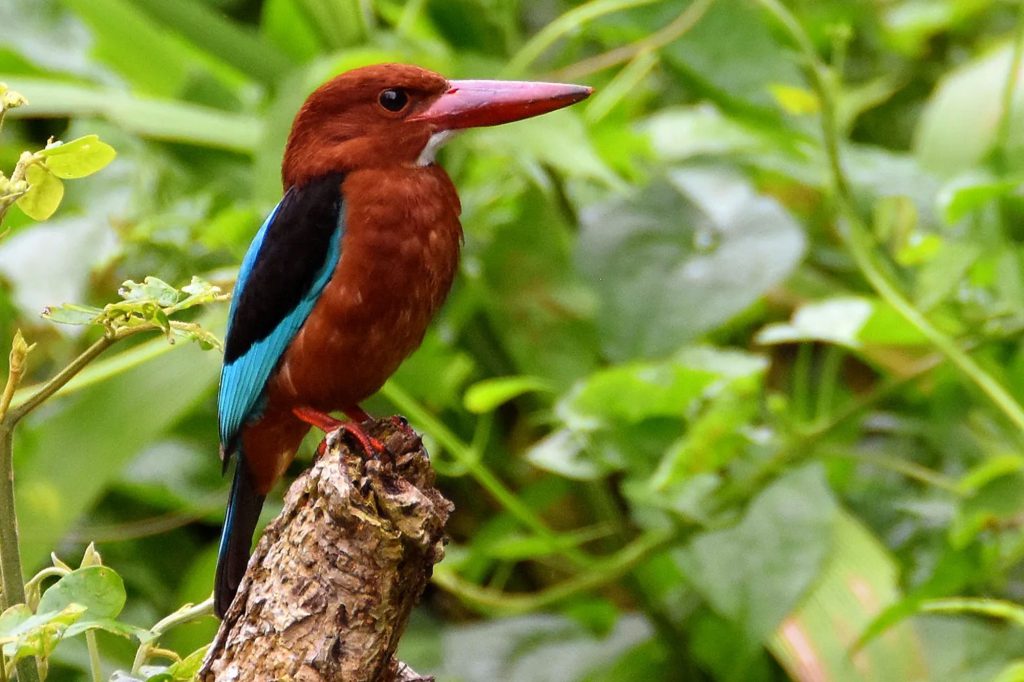
BROWN-BREASTED KINGFISHER
Halcyon gularis
Kingfisher birds may be tiny, but its brightly colored feathers shine like gems in the green forests.
The Philippines is ranked third for the world’s highest concentration of endemic bird species per square kilometer. Among them, the Kingfisher family has 19 species, 12 of which are found nowhere else. These lively birds are scattered across the landscape, hunting on both land and water. You can find them along riversides, in lush lowland forests, across rice fields, and among tangled mangroves. Their vibrant feathers make them hard to miss, like tiny living gems shining in our forests.
The Brown-breasted Kingfisher (Halcyon gularis), with its sky-blue wings and striking red beak, often perches patiently on tree branches, waiting for the perfect moment to strike. With a sudden dive, it snatches fish from streams or swoops low to catch small reptiles, snails, worms, and insects.
When a forest thrives with unique species, our ecosystems flourish now and for generations to come. Because the Brown-breasted Kingfisher lives only in the Philippines, we must make its protection a top priority so it can continue to glisten in our forests.